I advise financial institutions and Web3 companies on digital-asset strategy, serving as the bridge between the two.
Public blockchains, stablecoins and tokenised assets are changing how financial infrastructure works. I help financial institutions and Web3 companies understand the implications, define their position and decide where practical action makes sense. I am available now for conversations about board and advisory mandates beginning in Q4 2026.
When finance is unbundled and rebundled, it comes down to winning or losing relevance. I help decision-makers read the shift and find their direction.
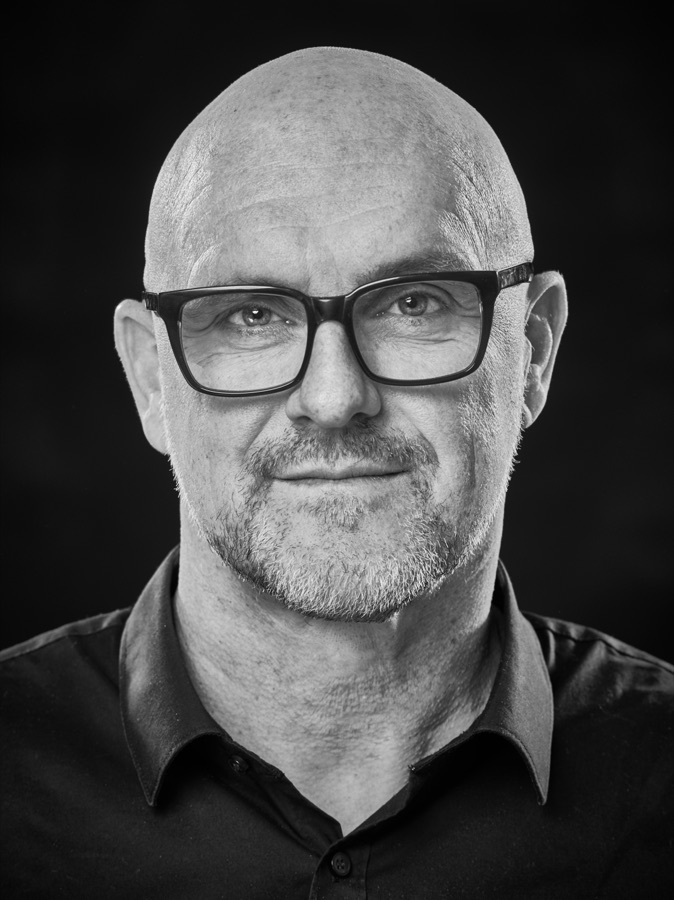
I have spent more than 30 years building and leading technology businesses. After studying computer science, graduating with distinction, I began my career as a software engineer and architect. During 23 years at Zühlke, I moved into business-unit leadership, served nine years on the German executive committee and helped grow the organisation from 150 to 350 employees.
In 2017 I started using crypto and DeFi myself, not just for exposure, but in practice: paying day-to-day in euro stablecoins from a self-custody Visa card, voting in DAO governance, living the products. That kind of first-hand experience is rare in institutional finance. It let me see where the next financial system was heading before it was obvious, and every client conversation since has shown me where the traditional system really breaks.
As a committed European, I care deeply about integrity, openness and trust. Digital assets hold my attention because I see them as a structural change to finance, not just another technology cycle.
Three strengths, combined.
My profile combines technical depth, years of leadership experience, and hands-on experience with crypto and DeFi. That combination is rare.
I understand the technology behind the hype.
I trained as a computer scientist and built systems for years before I ever led them. That is why I can read a technology for what it will actually do.
Understanding can't be pitched.
I get people to believe, and move.
I have spent almost 20 years in leadership roles, including nine years on Zühlke Germany's executive committee. I focus on clarity, personal development and servant leadership.
You go fast alone; you go far together.
Hands-on practice, not exposure.
Active in crypto and DeFi since 2017, not as an observer but as a daily user. That kind of first-hand Web3 experience is something few in institutional finance have, and it sharpens the eye for where the market is heading.
I use what I recommend.
I work comfortably at both board level and within the Web3 community. That may mean preparing a decision paper for a bank or discussing emerging privacy technology with developers at DappCon. My years mentoring startups in the Frankfurt Rhine-Main region also connect me with founders and investors.
Earlier in my career, I worked on connected machines (IoT), service-oriented architectures, mobile technology and decentralised energy before they became mainstream business topics. Since 2017, digital assets have been the main focus of that same interest in emerging infrastructure. The area I follow most closely now is where digital assets meet AI: agentic payments and machine-to-machine money.
Software engineer · Delta Information Systems
Architect · consultant · BU lead · Zühlke
Equity partner · Zühlke
MD Technology · German ExCom · Zühlke
Chief of Blockchain · Head of Thought Leadership · Zühlke
Next chapter
How we can work together.
My three strengths come together in the two things I bring to every engagement: independent judgment, and a network built over decades that opens doors and creates impact. From these, three forms of working together typically emerge.
Board and advisory mandates.
I take on mandates on supervisory and advisory boards of companies where finance, technology and regulation come together, at established institutions as well as at growing technology companies. The experience and perspective I bring to a board is described below.
Strategic sparring.
For decision-makers who want to test their digital-asset position against an honest, independent perspective, and for technology companies that want to sharpen their strategy and better reach institutional customers. Whether your strategy is already in place or still taking shape: I support you exactly where an outside perspective makes the biggest difference, focused, pragmatic and without unnecessary process. Scope and rhythm of our collaboration follow your specific needs and are agreed together. Your questions, challenges and ideas are welcome at any time.
Matchmaking.
As a strategic matchmaker, I connect established financial institutions with the teams developing innovative financial products on new infrastructure. This is about more than contacts: the right combinations of people and organisations, shared interests, and collaboration that lasts. My principle is simple: I only bring together people, companies and solutions I am convinced of myself.
You have a different format in mind, perhaps a keynote, a moderation or the content curation of an event? Then feel free to write me at hello@grasmann.io.
I am independent, but not without opinions. I listen, form my own judgment, and say openly what I think.
What this means for a board.
Boards benefit from members who understand ownership, leadership and technology. I bring experience in all three, as the following examples illustrate.
Governance from the owner's side. As a partner and shareholder I shared responsibility for governance at group level through Zühlke's partner assembly. Earlier, in my consulting work, I supported a company through the technical due diligence of its acquisition. I understand the role of a supervisory or non-executive board because I have often been part of the strategic discussions with its members.
Steady when it's hard. During the COVID pandemic, with no works council in place, we had to create the conditions for possible short-time work at short notice. Within two weeks, we reached sign-off from 98 percent of the workforce. What a board ultimately cares about is how someone behaves under real pressure. That is how I answer that question.
People and culture at scale. I introduced self-managed teams, played a leading role in rolling out OKRs company-wide, and led a growth-mindset initiative across Europe and Asia. The result: a company people are glad to work for, recognised again and again as a Great Place to Work (2010, 2013, 2016 and 2019).
What I currently believe.
Three convictions I stand by. I argue them in the open, and if the market proves me wrong, I change them.
Cash and assets can now settle together – in a single step, instantly and around the clock.
The real revolution is money and assets settling on the same rail.
Public blockchains can offer something no privately controlled network can fully replicate: credible neutrality and permissionless access at the base layer, while still allowing institutions to apply their own rules and access controls on top. When both the cash leg and the asset leg settle on this shared infrastructure, delivery-versus-payment can happen atomically – in a single transaction, instantly and 24/7. After a decade of promises, the necessary architecture is finally in place.
Software will soon make countless small payments on our behalf. That requires infrastructure designed for machines.
AI agents won't get bank accounts. They'll get access to wallets.
AI agents will initiate payments at a frequency and scale that card networks were never designed for: large numbers of low-value transactions in rapid succession, executed within permissions granted by users through their wallets. This is where public blockchains and stablecoins are particularly well suited. Larger transactions may continue to run on traditional payment rails, and that is perfectly fine.
Fraud is no side issue: every scam burns trust that honest builders spent years earning.
Speculation made crypto strong. Scams keep it small.
The casino years subjected public blockchains to a relentless stress test. They exposed weaknesses, forced systems to improve and turned the leading networks into some of the most battle-tested infrastructure in finance. But scams continue to undermine trust. Today, they are a greater obstacle to adoption than regulation itself.
The frameworks I think with.
Two models I keep coming back to, public for some time, and still how I make sense of a fast-moving market and where it's heading.
Three Waves of Adoption
How institutions actually move (from crypto to digital money to tokenised capital markets) and why most stall between the waves.
Three Layers of the New Financial System
Where value settles, who owns the rails beneath it, and which layer you're really competing on.
Publications
A monthly newsletter and a long-running podcast, for anyone in traditional finance or the crypto scene who wants to stay ahead of the curve.
Future settles here
Once a month, I distil the developments that matter most in digital assets and financial infrastructure: focused, clear, and written for real decisions.
read the latest issue →Bitcoin, Fiat & Rock'n'Roll
Conversations on digital money and financial infrastructure, with the people building and regulating it.
listen →On stage.
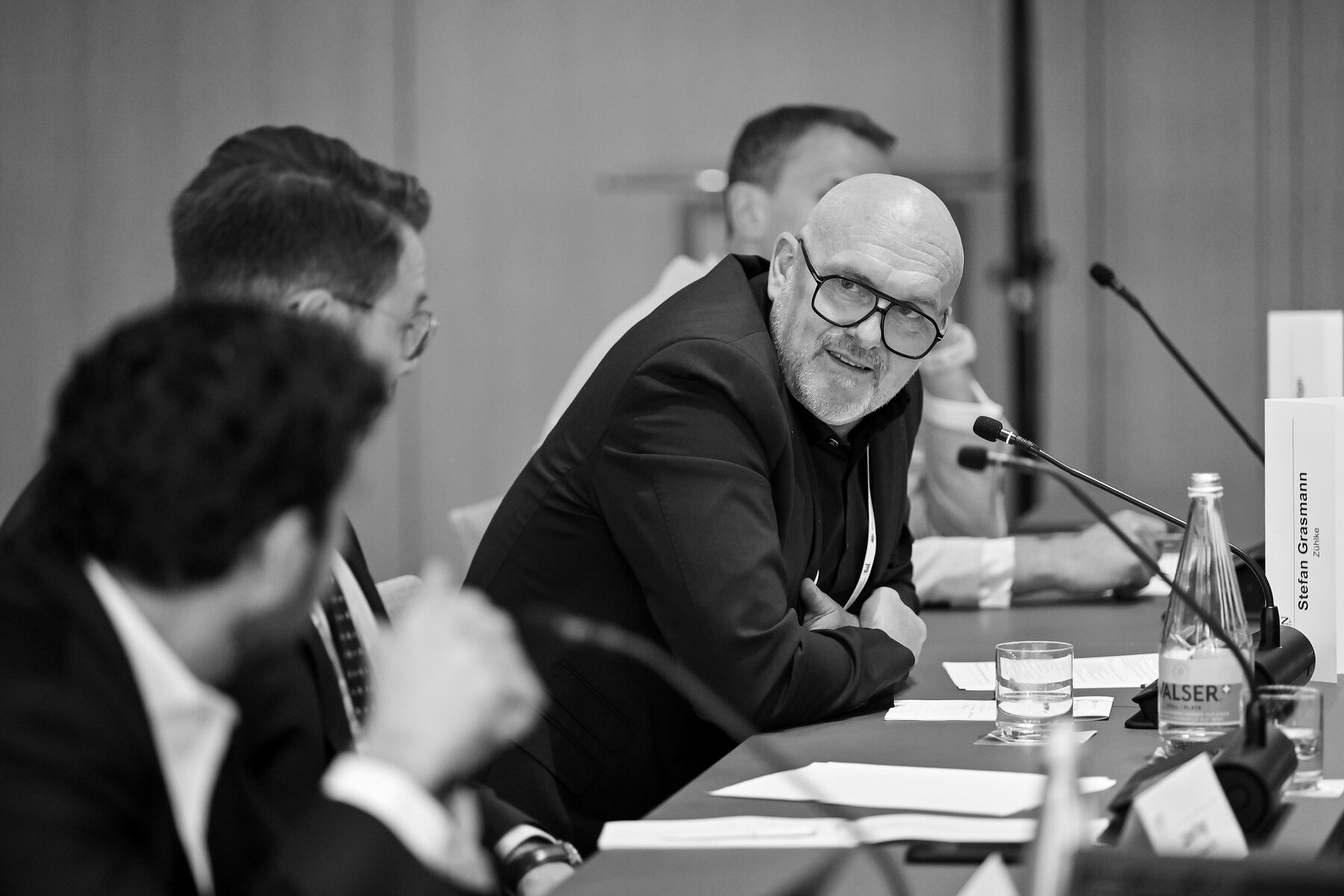
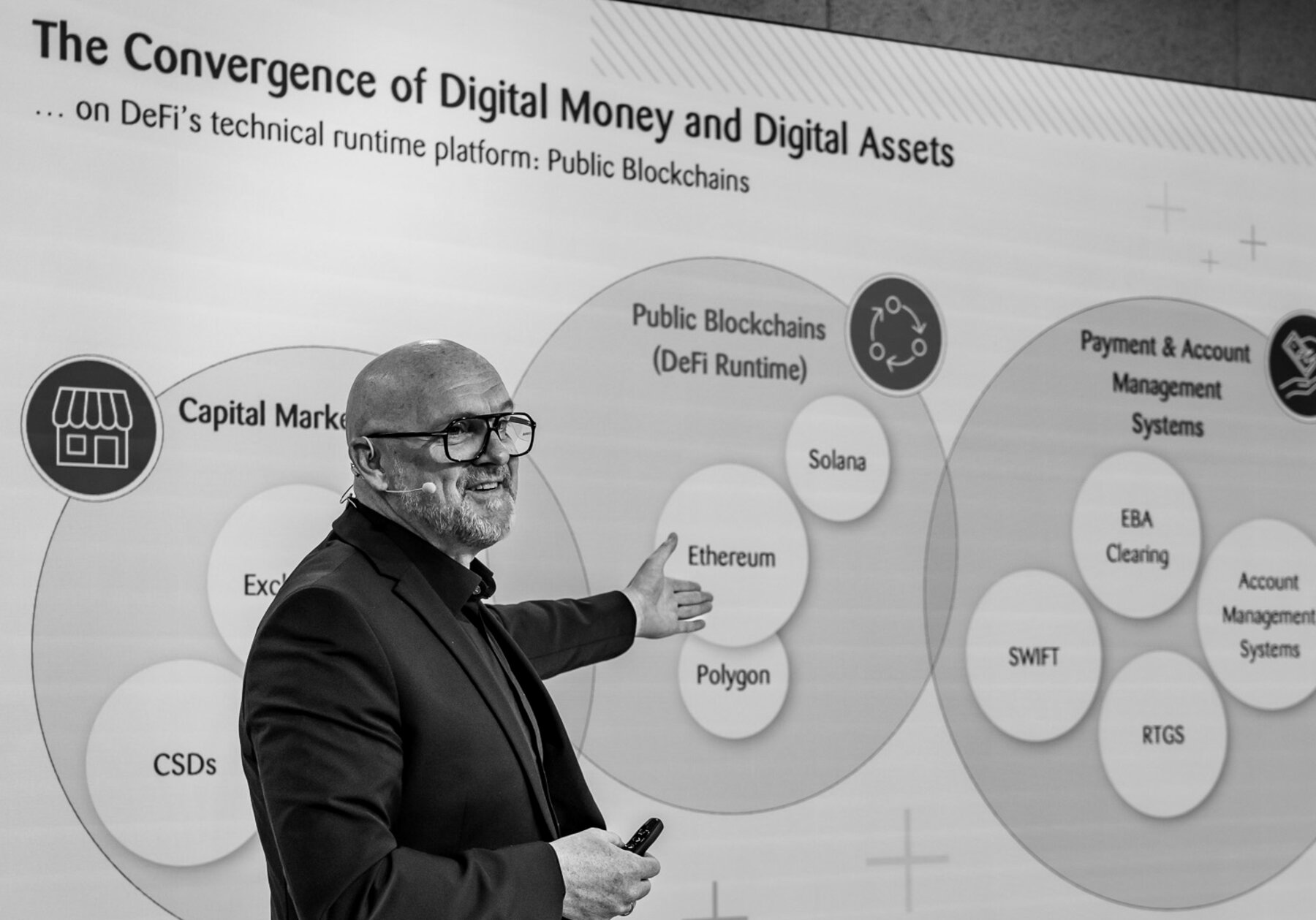
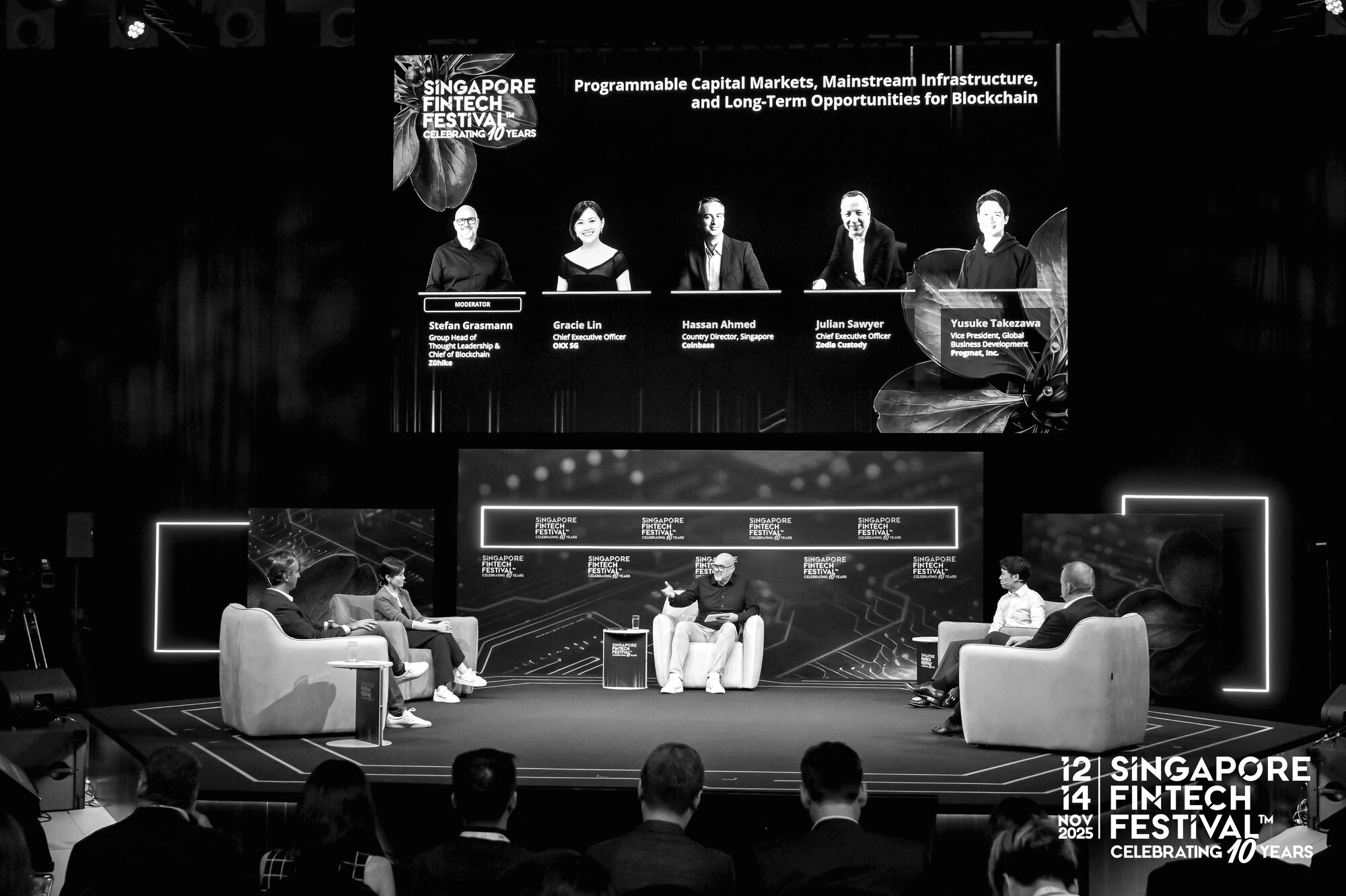
Keynotes and panel moderation at the industry's leading conferences (Zürich, Singapore, Frankfurt, Munich), to date as Chief of Blockchain at Zühlke. Available for independent speaking and moderation from Q4 2026.
The Future of Finance: From Speculation to Settlement
Crypto assets → digital money → tokenised capital markets, and why public blockchains are becoming shared infrastructure for both money and assets.
Point Zero Forum
Zürich · 2024 · 2025 · 2026
Singapore Fintech Festival · Insights Forum
Singapore · 2023 · 2024 · 2025
HSG Alumni Conference
biennial · 2015–2025
Tokenization Summit
Zürich · 2025
BankersCom
Zürich · 2025
TokenFuture 2024
Frankfurt · 2024
Open to speaking and moderation from Q4 2026: hello@grasmann.io · full profile on Sessionize.
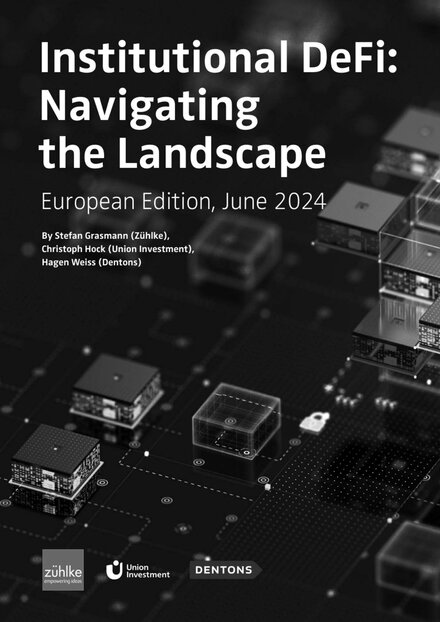
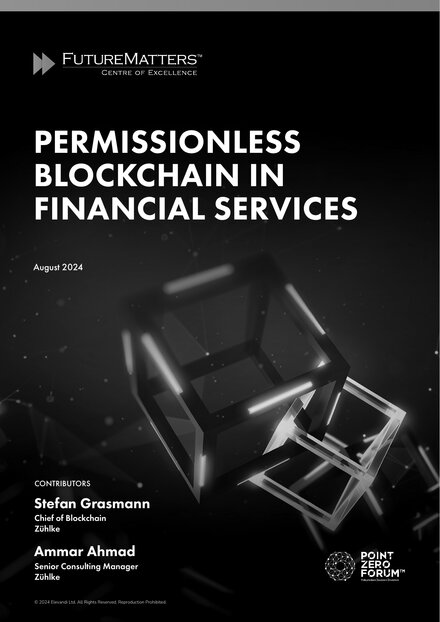
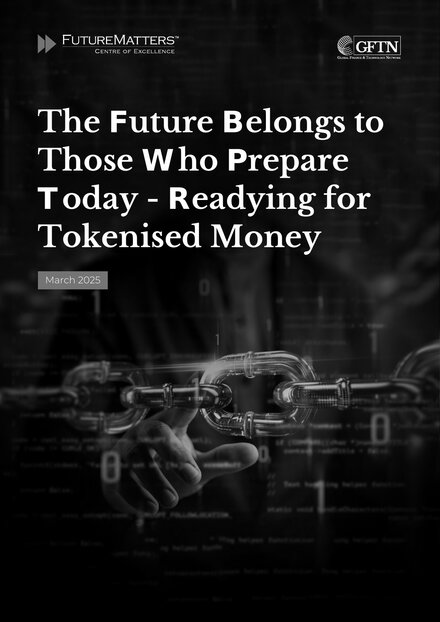
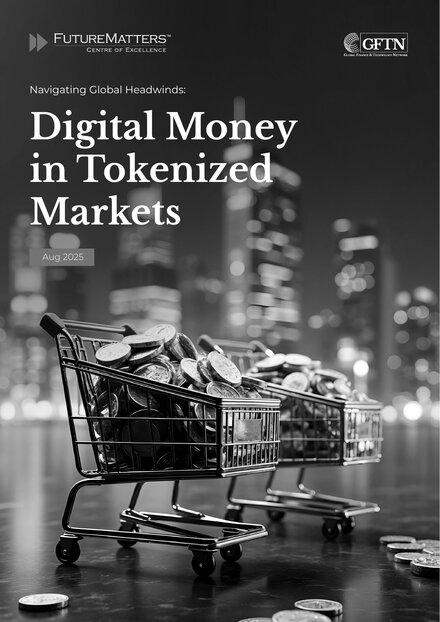
Whitepapers, with institutions.
These papers document the research and practical conclusions developed with banks, asset managers, law firms and colleagues during my time at Zühlke.